
Strategic philanthropy
meets environmental stewardship.
Working together to shape a lasting legacy for Bass Coast—one tree, one hectare, one coastline at a time.
Our Vision
The natural environment of Bass Coast is secure and constantly improving.
Our Mission
To engage landowners, donors, and volunteers to bring 30% of Bass Coast land into the community’s active environmental care.
Objectives
We focus on landscape scale restoration through five strategic objectives:
Protect priority areas of remnant biodiversity
Secure and restore landscapes with high biodiversity potential
Establish viable habitat refuges, connected through biolinks
Create an intergenerational legacy for future communities

Leverage partnerships, donations, and green investment markets
Our purpose and role
To reverse biodiversity decline, by preserving and enhancing existing habitat and by accelerating the restoration of habitat across public and private land in and around Bass Coast.
The Foundations unique approach to conservation involves owning the land in perpetuity and appointing other entities as stewards to manage the land.
Foundation Structure
In 2024 Bass Coast Shire Council and Biodiversity Legacy partnered to establish the Nature Recovery Foundation—a not-for-profit organisation dedicated to reversing biodiversity loss and driving habitat restoration across the region.

Bass Coast Shire Council (BCSC) is a Regional Local Government that has been servicing the community and environment for decades. BCSC is on the forefront of environmental restoration and conservation.
Bass Coast is naturally beautiful and together we build resilience by protecting and enhancing our natural environment. After decades partnering with community groups and rural landholders to restore biolinks, BCSC embarked on this initiative to accelerate and expand our nature recovery efforts.
BioDiversity Legacy (BDL) Limited is an independent not-for-profit organisation founded in 2022 to support an alternative pathway for protecting habitat for plants, animals and people.
BDL’s key function is to facilitate the transfer of land title into a safe ownership structure and provide governance to support this process. BDL’s strength lies in their ability to walk together with others, to facilitate connectivity and build capacity for collaborative biodiversity outcomes for generations to come.
Mechanisms for Action
We will achieve our purpose by:
Owning land in perpetuity for conservation.
Securing habitat and connecting biodiversity corridors.
Appointing stewards to manage and restore habitat.
Ensuring expert care and community connection.
Protecting and restoring biodiversity hotspots across landscapes.
Creating connected sanctuaries for wildlife.
Key Themes
Protecting Western Port Woodlands
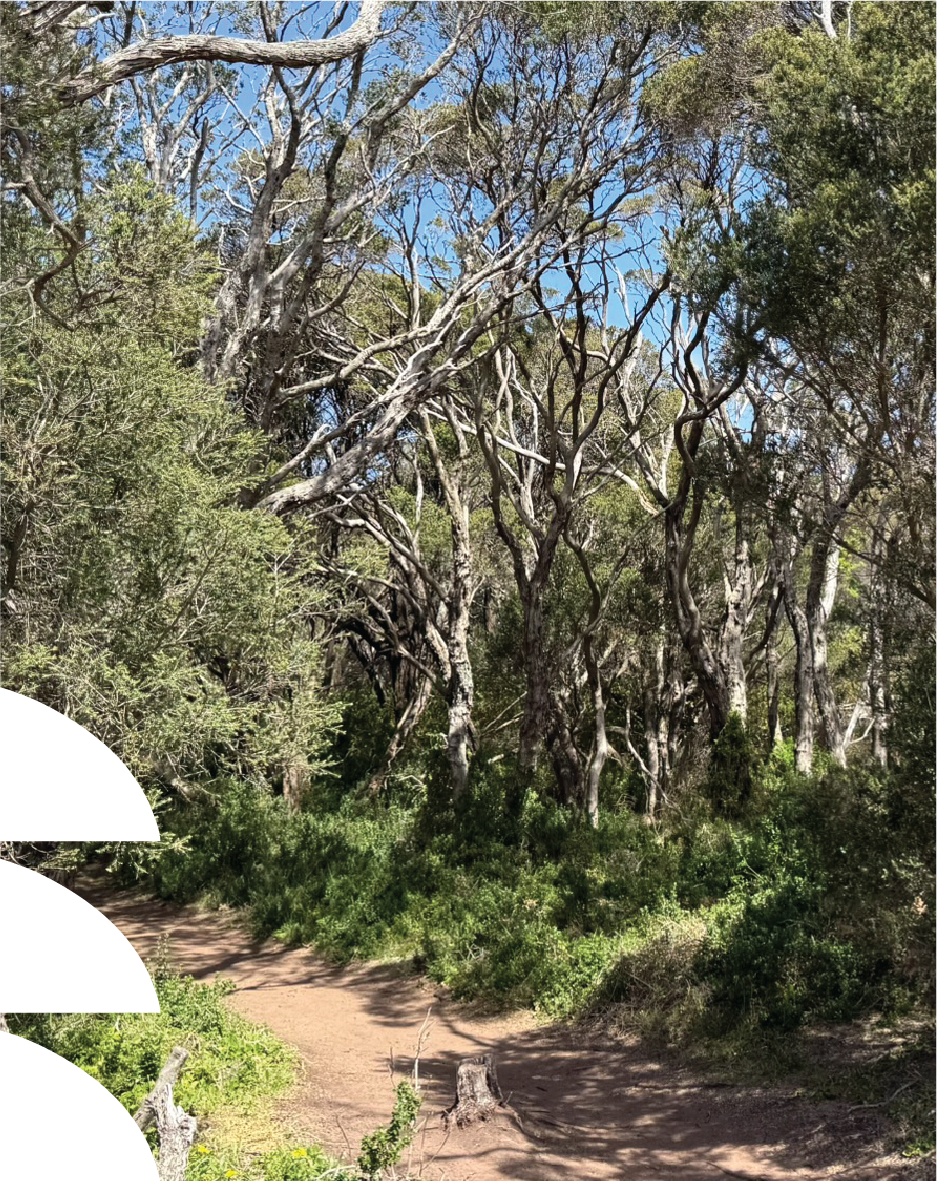
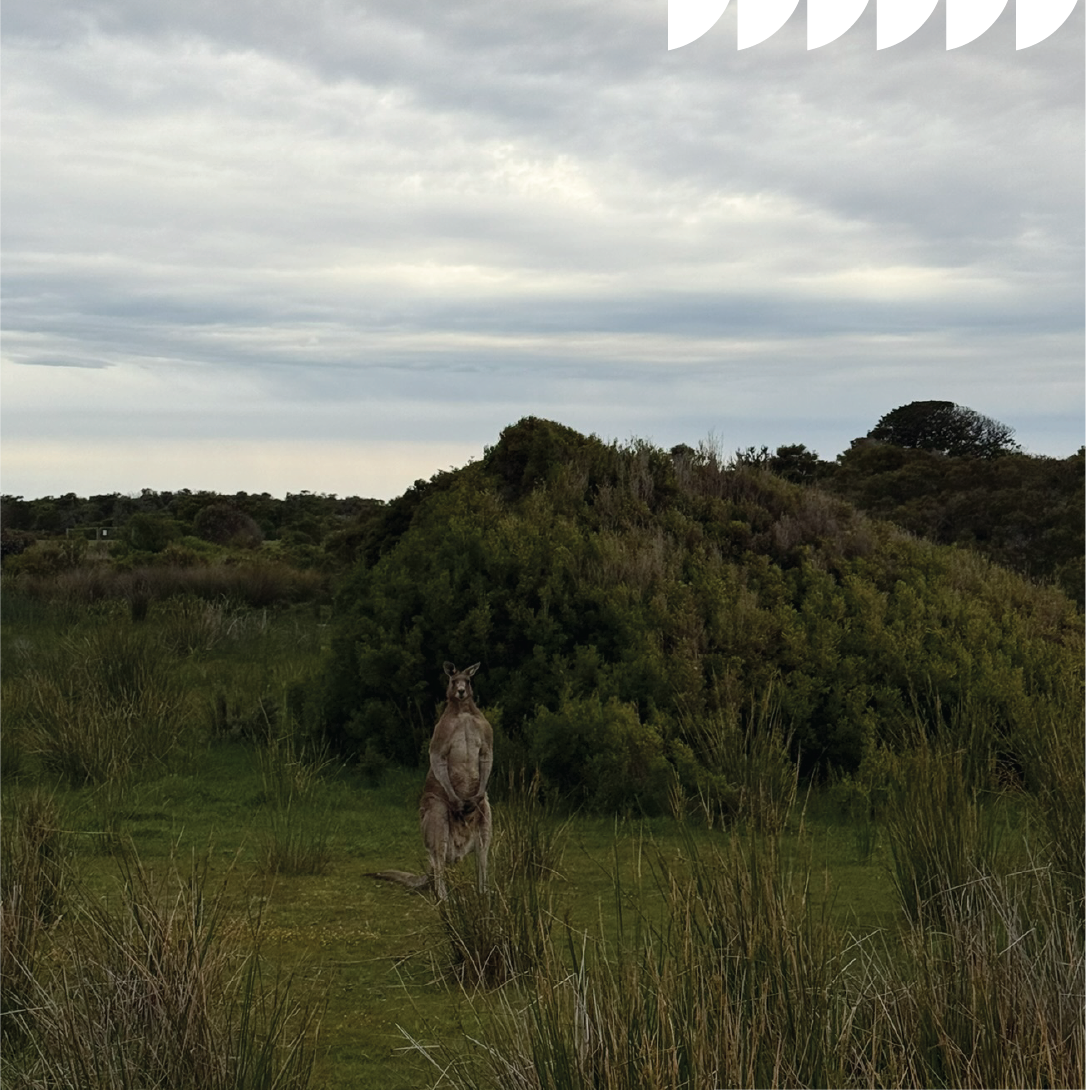
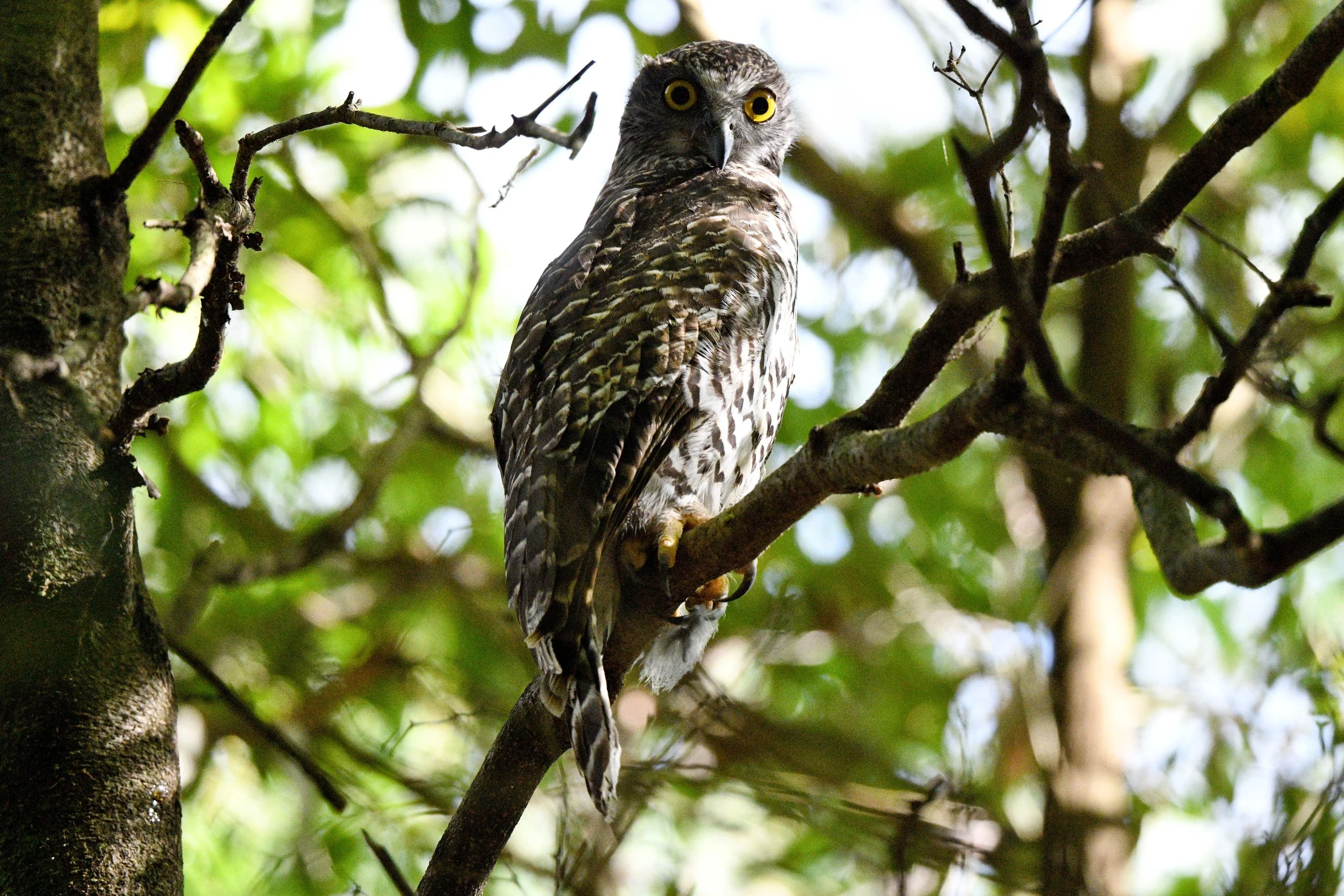
The Western Port Woodlands is a string of reserves with significant remnant native vegetation, providing habitat for threatened species, including the Tea-Tree Fingers, Thick-lip Spider-orchid, Southern Brown Bandicoot, Giant Gippsland Earthworm, Swift Parrot, Lace Monitor and Powerful Owls. A key priority is establishing linkages between reserves and areas of protection and revegetation to enhance habitat connectivity.
Restoring Coastal Ecosystems
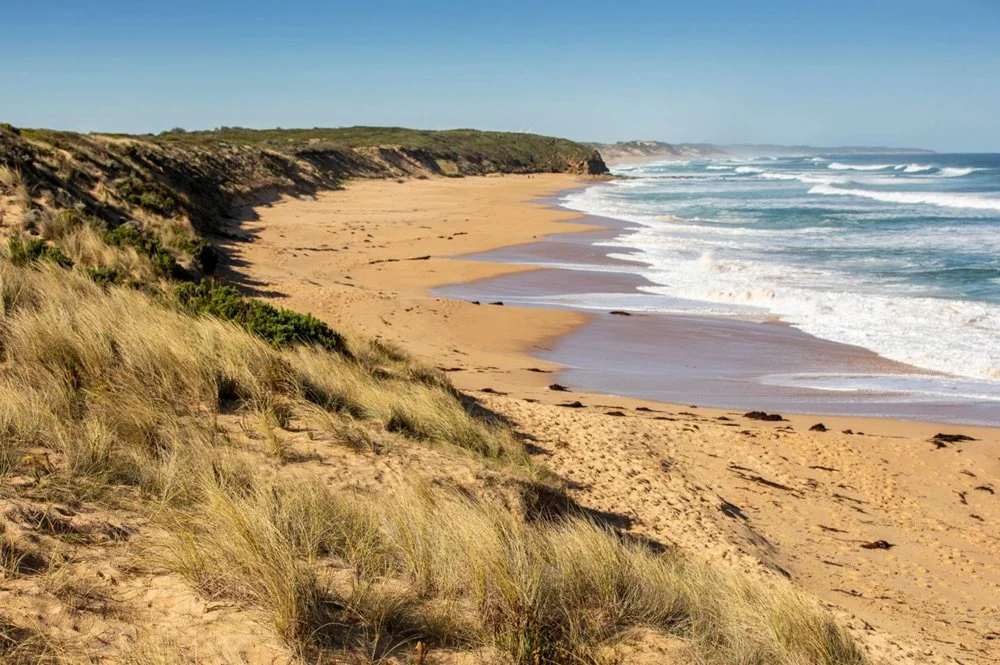
Coastal ecosystems protect shorelines, store carbon, and provide vital habitat for wildlife. But decades of clearing and development have left them degraded.
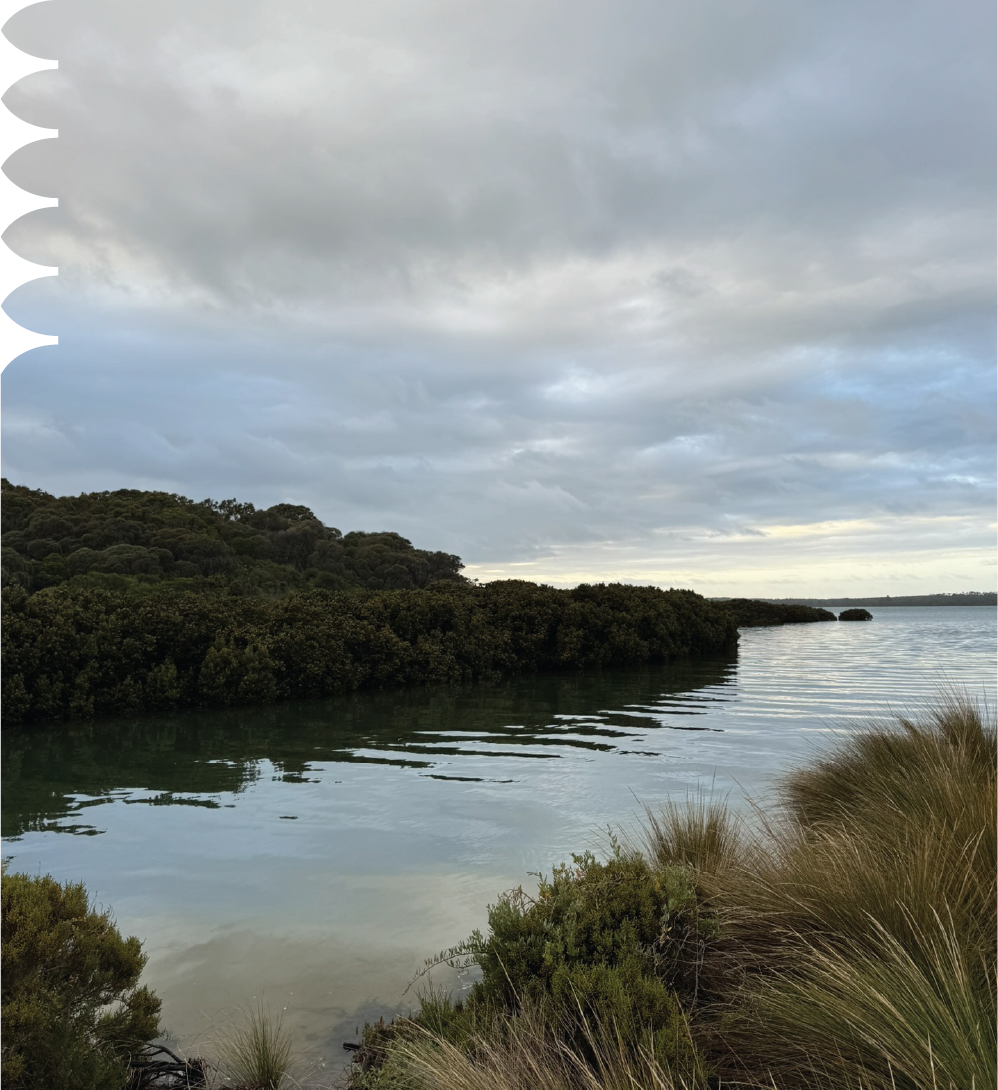
We can restore mangroves, saltmarshes, and dunes to bring life back to our coasts, to strengthen resilience to climate change, and to safeguard these precious places for future generations.
Growing biolinks across Bass Coast
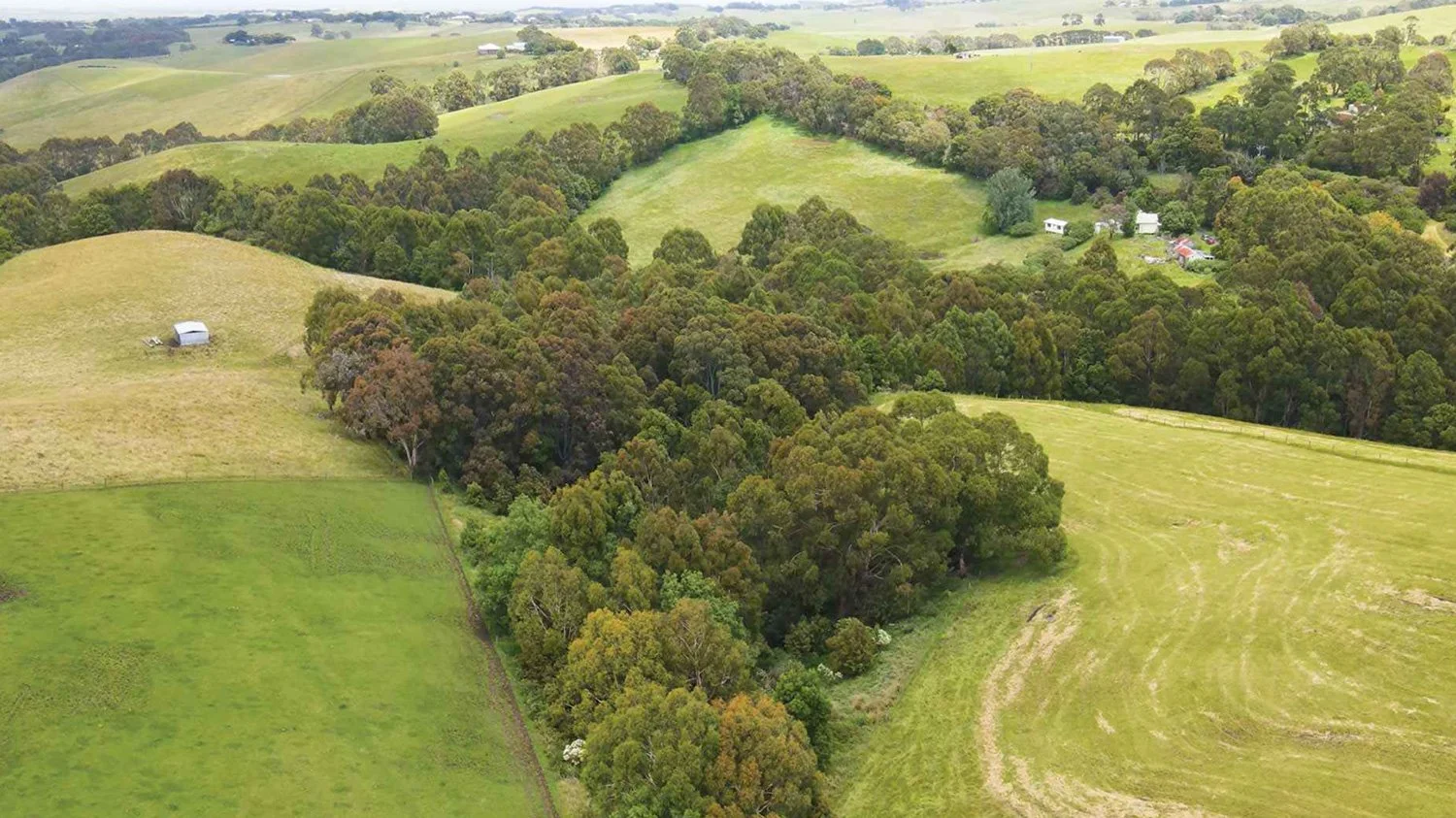
Since colonisation, around 85% of Bass Coast’s native vegetation has been cleared. Now is the time to restore what’s been lost—by planting trees, shrubs, and grasses that create thriving habitats, support biodiversity, and strengthen our landscapes against climate change. Protecting what remains is just as vital, safeguarding soil, water, and wildlife while helping regulate our climate. Bringing nature back is key to healing our environment, protecting species, and preparing for a changing future.
Meet Our
Board
Greg Box
Bass Coast Representative
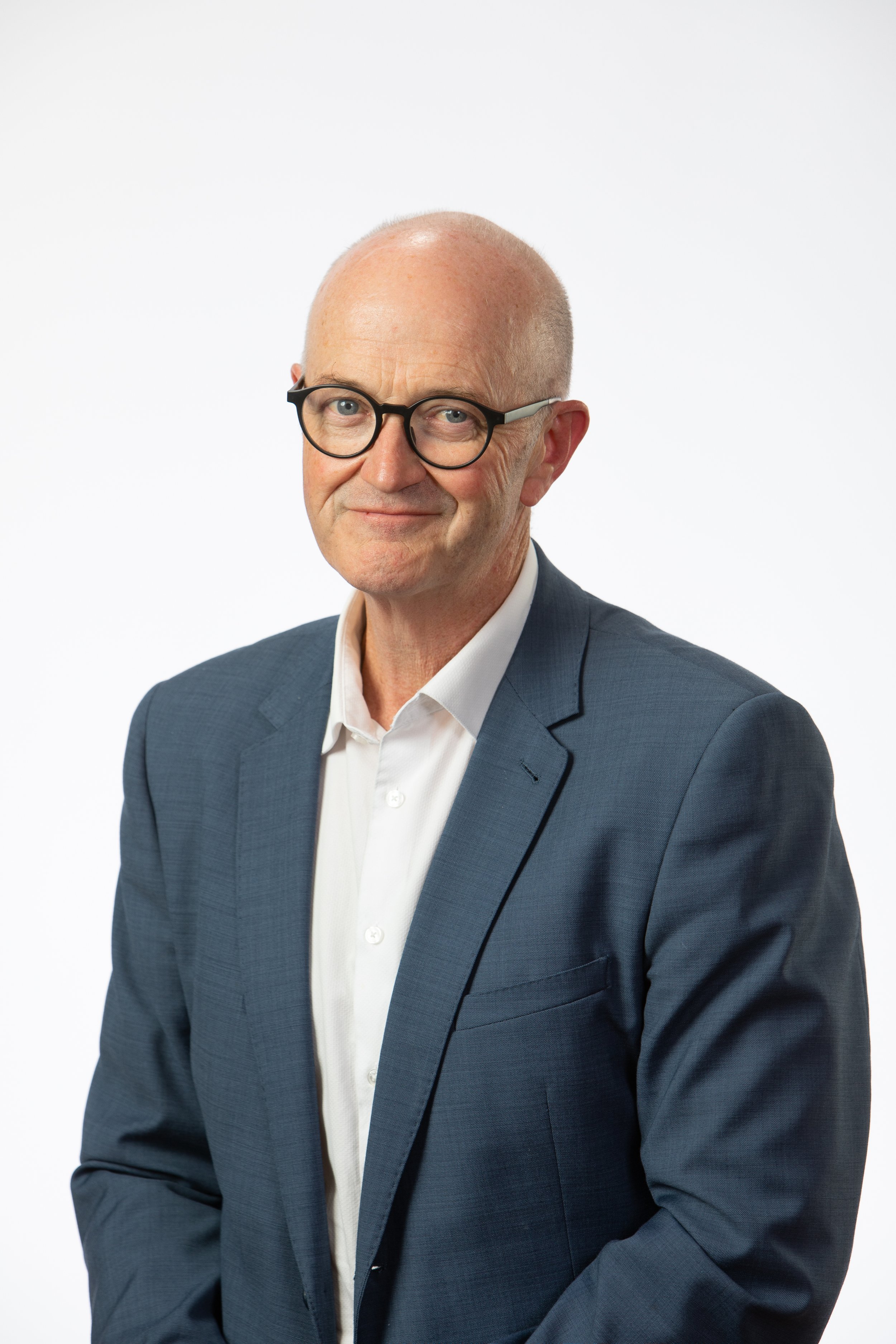
Greg Box serves as the Chair of the Nature Recovery Foundation, reflecting his deep commitment to environmental sustainability. In his role as the CEO of Bass Coast Shire Council, Greg was active in establishing the Nature Recovery Foundation. He holds multiple board positions with several tourism and education organisations, including Destination Gippsland, Destination Phillip Island and the Bass Coast Country Universities Centre.
With over two decades of extensive experience in Local Government, Greg is a highly respected leader known for his forward-thinking vision and passionate advocacy for the role of local governments. Greg’s expertise in developing impactful outcomes and leading award-winning engagement programs has significantly benefited local communities, garnering both national and international recognition.
Jodi Kennedy
Bass Coast Representative
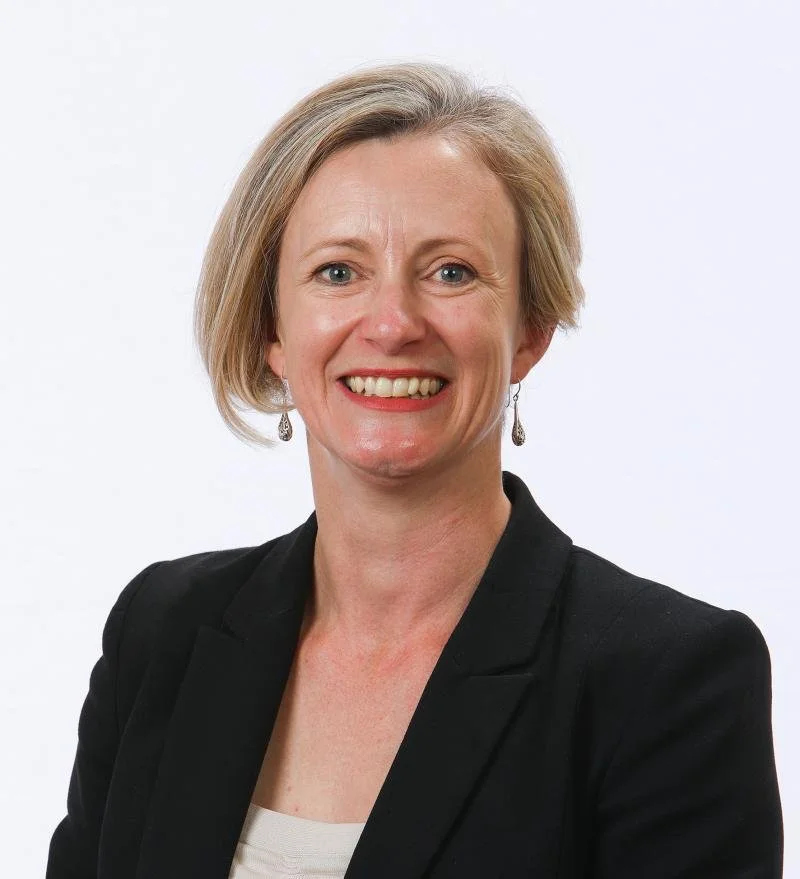
Jodi is a strategic, community-focused leader with more than two decades of senior experience across local and state government and the private sector. Jodi has been involved in a number of Boards and is currently the President of the Victorian Planning & Environmental Law Association (VPELA). She builds confident, high-performing teams, works authentically with stakeholders, and is committed to service and strategy excellence.
As General Manager Community and Culture at Bass Coast Shire Council, Jodi played a key role in establishing the Nature Recovery Foundation. Jodi holds a BA in Urban Studies, and a Master of Public Policy and Management. She is widely respected for her professionalism, accountability, strong networks, and dedication to genuine community engagement.
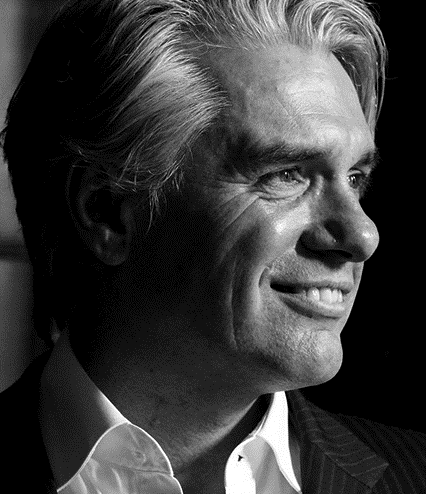
Christopher Balmford
BioDiversity Legacy Representative
Christopher is a sea kayaker and a former lawyer at the international law firm Baker and McKenzie. He leads 2 Australian plain-language businesses, a consultancy Words and Beyond and an online learning provider In-Game Learning. He founded the legal document provider Cleardocs.com, which Thomson Reuters acquired in 2011. He was the inaugural convenor of the ISO working group that developed Part 1 of ISO’s plain language standard, published in 2023.
Christopher has served on the boards of not-for-profits with an environmental focus including, the Yarra Riverkeeper Association Inc. (as President), Birrarung Valley Walk Inc., and Wollangarra Outdoor Education Inc. (as Chair).
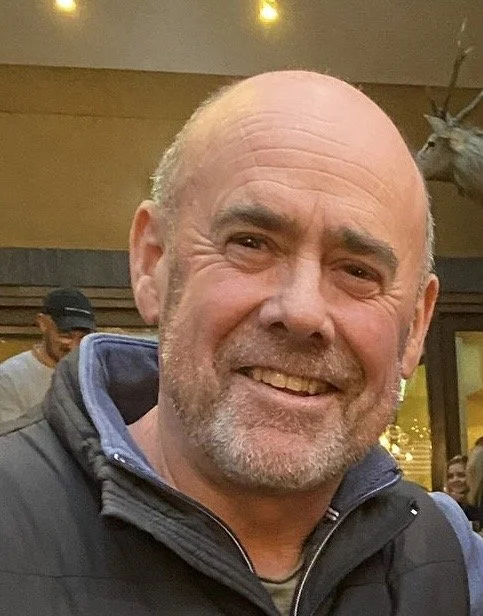
Tim Rowe
BioDiversity Legacy Representative
Tim’s lifelong connection to nature began in childhood, shaped by early experiences in his cousin’s Bendigo biodiverse garden and family trips to Wilsons Promontory—traditions he now shares with his own family.
Across roles in Manningham, Yarra Ranges and Wellington Shires, Tim established a respected leadership profile in horticulture, natural resource management and sustainability. He led high-impact creek revegetation and park rehabilitation programs, strengthening ecosystem health and community connection to nature.
As Manager Natural Environment & Parks at Wellington Shire, Tim drove strategic direction, guided policy development and built collaborative teams that delivered enduring environmental improvements.
At BioDiversity Legacy, he continues to lead by fostering strong partnerships and championing biodiversity conservation and land stewardship to secure healthier landscapes for future generations.
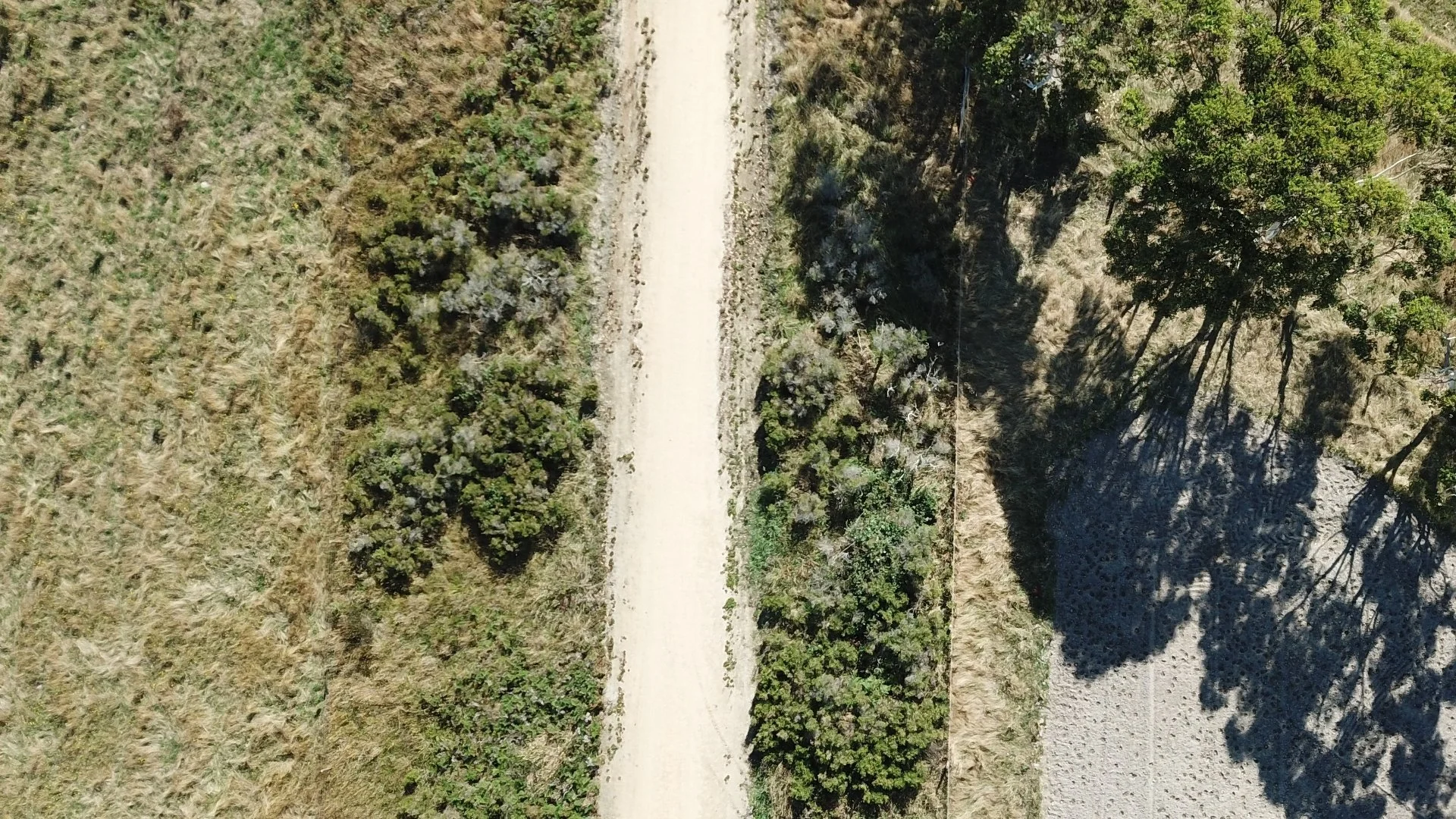
We need to help nature recover.
For its sake
and for ours.
Challenge
Only 15% of native vegetation remains in Bass Coast, which is half the minimum 30% that a United Nation’s report says is required for healthy ecosystems.
With the majority of land in private hands, government cannot deliver this outcome by itself. Much of the native vegetation we do have is fragmented or degraded. This puts our iconic animals at risk. And climate change is increasing the pressure on the animals and on our ecosystems. So restoring landscape to give Bass Coast 30% native vegetation is crucial for the region. Working towards that goal will also address interconnected global environmental challenges such as:
1. Biodiversity Loss
Currently, species extinction rates are accelerating due to habitat loss. For example, at present, native vegetation in the Powlett River / Kugerungmome catchment accounts for only 3.2% of the area. Much of this is highly fragmented and in moderate to poor condition.
Restoring ecosystems provides safe habitats for plants and animals, reducing extinction risk and maintaining genetic diversity.
2. Climate Impacts
Healthy ecosystems like forests, wetlands, and grasslands act as carbon sinks. The ecosystems in Bass Coast sequester 2,000tCO2e per hectare, per year. So, each hectare restored to bushland provides a carbon sink for the pollution from 400 cars. If we can lift the native vegetation cover in Bass Coast from 15% to 30%, then we would remove further thousands of tons of CO₂ each year. This would help to meet local, and global, climate targets.
Our Unique Model
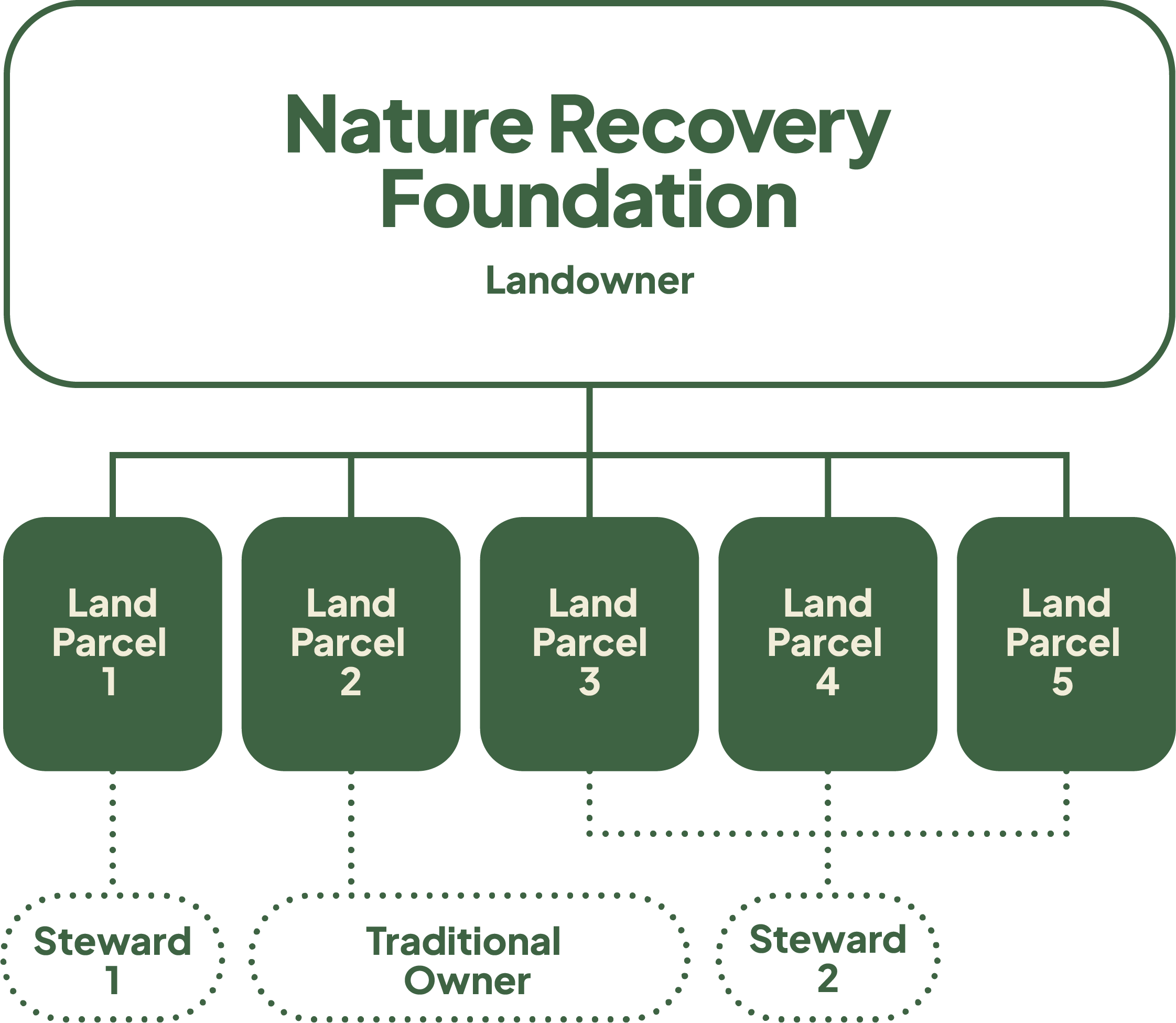
What is the NRF Model?
NRF holds the land title.
We are the legal, permanent landholder. This ensures a donor’s gift is safe and their wishes are honoured.
NRF appoints stewards to manage the land.
We work with trusted stewards, often local community groups, to restore and care for the land.
NRF oversees steward and, if necessary, intervenes.
For example, if a steward becomes dysfunctional, then NRF either steps in with governance and resources to get the steward “back on its feet” or appoints a new steward to ensure land is protected over time.
Donors have flexibility.
Land donors can negotiate conditions for access, involvement, or even residence on the land. Your legacy remains yours. There are tax issues to consider here.
Why our model
is different
We secure permanent protection of critical biodiversity areas.
Our strategy moves beyond short-term agreements to deliver enduring conservation outcomes.
We appoint local organisations to steward and manage the land we own. They do so in accordance with the NRF’s ecological standards. This embeds accountability, local knowledge, and long-term care into every site.
Collaboration between Government, community and a not for profit organisation.
Want to know more?
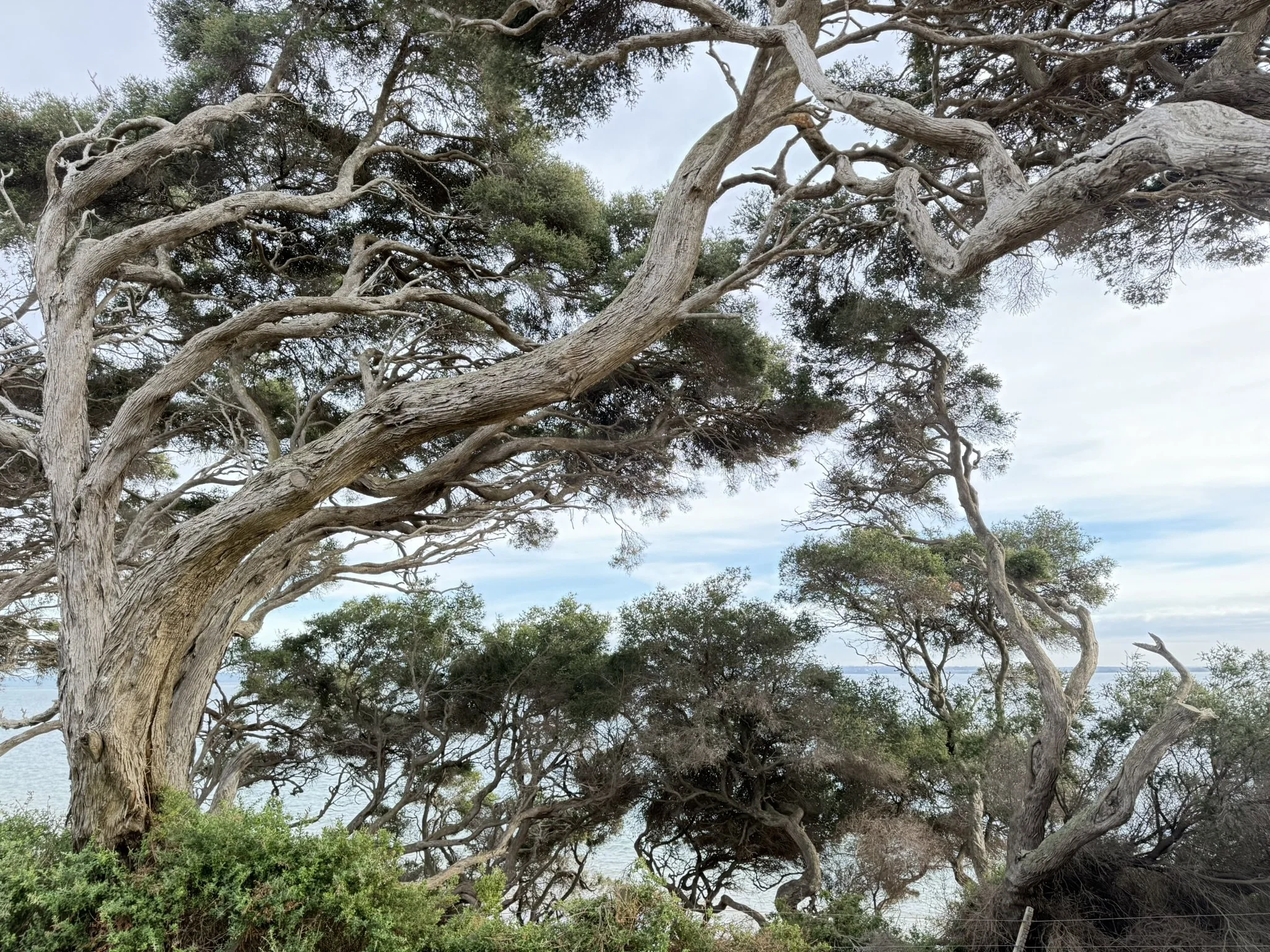

The Nature Recovery Foundation offers a unique opportunity to protect and restore Bass Coast’s ecosystems through landscape scale conservation, community engagement, and strategic partnerships.
With only 15% of native vegetation remaining and with iconic species under threat, the Nature Recovery Foundation provides a model for success, drawing on past local achievements like the Scenic Estate Reserve and the Summerland Peninsula penguin sanctuary.
The NRF’s work is guided by strong governance and a commitment to scientific and traditional ecological knowledge.
By supporting the NRF, whether through philanthropy, land contributions, corporate partnerships, or community donation; investors and donors become part of a movement that delivers positive environmental impact, climate resilience, and intergenerational legacy for Bass Coast.
Together, we can protect, restore and enhance biodiversity, and inspire future generations to care for nature.
Support Our Mission
The NRF offers three meaningful pathways for donors, partners, and community members to make a lasting impact on the Bass Coast’s natural environment.
By participating in any of these pathways, you can help ensure the long-term protection of our unique local landscapes, while also supporting the wellbeing of the communities connected to them.
Pathway 1:
Land Donation
We enable landholders to protect land by transferring it into our trusted, non-profit organisation committed to long-term conservation. By donating land, you protect the land and all that goes with it. You also protect your legacy. Our approach:
Removes high biodiversity land from the property market to prevent future sale or development.
Places land in a secure structure backed by strong legal safeguards.
Ensures best-practice environmental stewardship for lasting ecological care.
Offers flexible arrangements – landholders and families can choose to remain on the land or opt for community-based management and stewardship.
Pathway 2:
Land Acquisition Fund
Our Land Acquisition Fund is designed for anyone seeking to contribute directly to the permanent protection of ecologically significant land. When you donate or invest in this pathway, your support goes toward strategic purchases of properties that are critical habitat for threatened species or serve as vital corridors connecting fragmented ecosystems.
By supporting the Land Acquisition Fund, you can:
Make a one-time or recurring donation to help secure land under legal protection.
Work with the Foundation to identify and prioritise land to acquire.
Participate in fundraising campaigns focused on specific conservation targets.
Receive updates and reports on the impact of your contribution, including success stories of newly protected areas and species benefitting from your support.
This pathway is ideal for individuals, families, foundations, and corporate partners who want to create a direct and enduring legacy for nature.
Pathway 3: Stewardship & Restoration Fund
The Stewardship & Restoration Fund enables donors and supporters to invest in the ongoing care and active management of land already acquired and protected. Contributions to this pathway will fund ecological restoration projects, such as revegetation, invasive species control, and habitat enhancement, as well as programs that involve the local community in stewardship activities.
By supporting the Stewardship & Restoration Fund you can:
Support hands-on restoration work and habitat improvement initiatives.
Fund educational and volunteer programs that foster community involvement and local stewardship.
Help maintain the health and resilience of protected land for future generations.
Collaborate with government, Landcare groups, and other partners to amplify the impact of restoration efforts.
Receive regular updates on restoration progress, biodiversity gains, and stories of community engagement.
This pathway is suited for those passionate about nurturing nature and ensuring that protected land continues to provide environmental and social benefits
Case Studies
Summerlands
From Housing Estate to Sanctuary
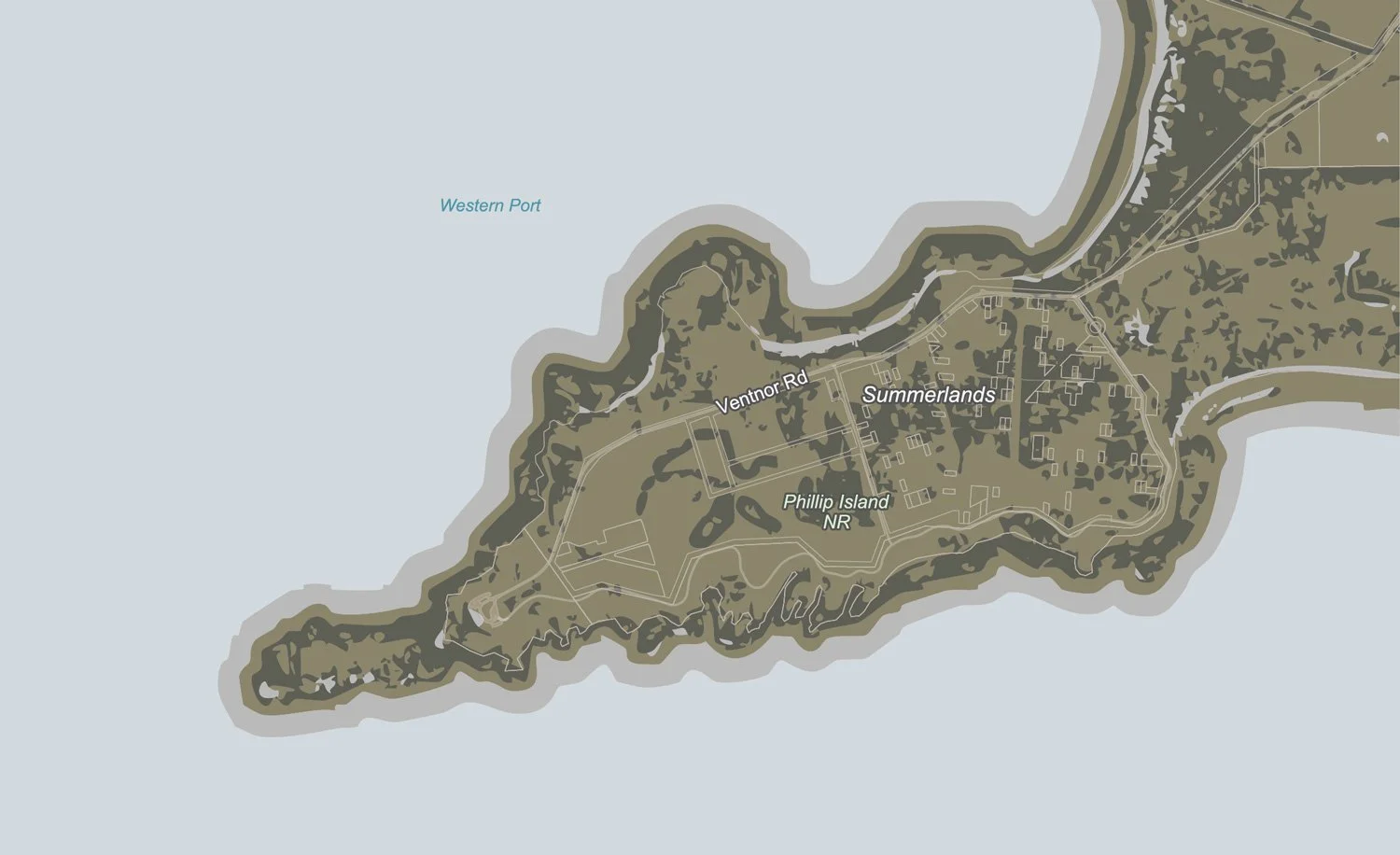
In the 1980s, Phillip Island's little penguins were on the brink of local extinction. A housing development on their breeding grounds, Summerland Estate brought cars, pets, and foxes, decimating their numbers. In 1985, the Victorian Government began buying back every property in Summerland Estate to return the land to the penguins. Over 25 years, homes were removed, foxes were eradicated, and habitat was restored, backed by a strong research-led conservation program. Today, the colony has rebounded from just a few burrows to over 40,000 breeding penguins – the largest little penguin colony in the world.
This remarkable transformation shows what’s possible when people act for nature. But there’s more to do. With your help, we can protect and restore precious habitats, safeguard wildlife, and inspire future generations.
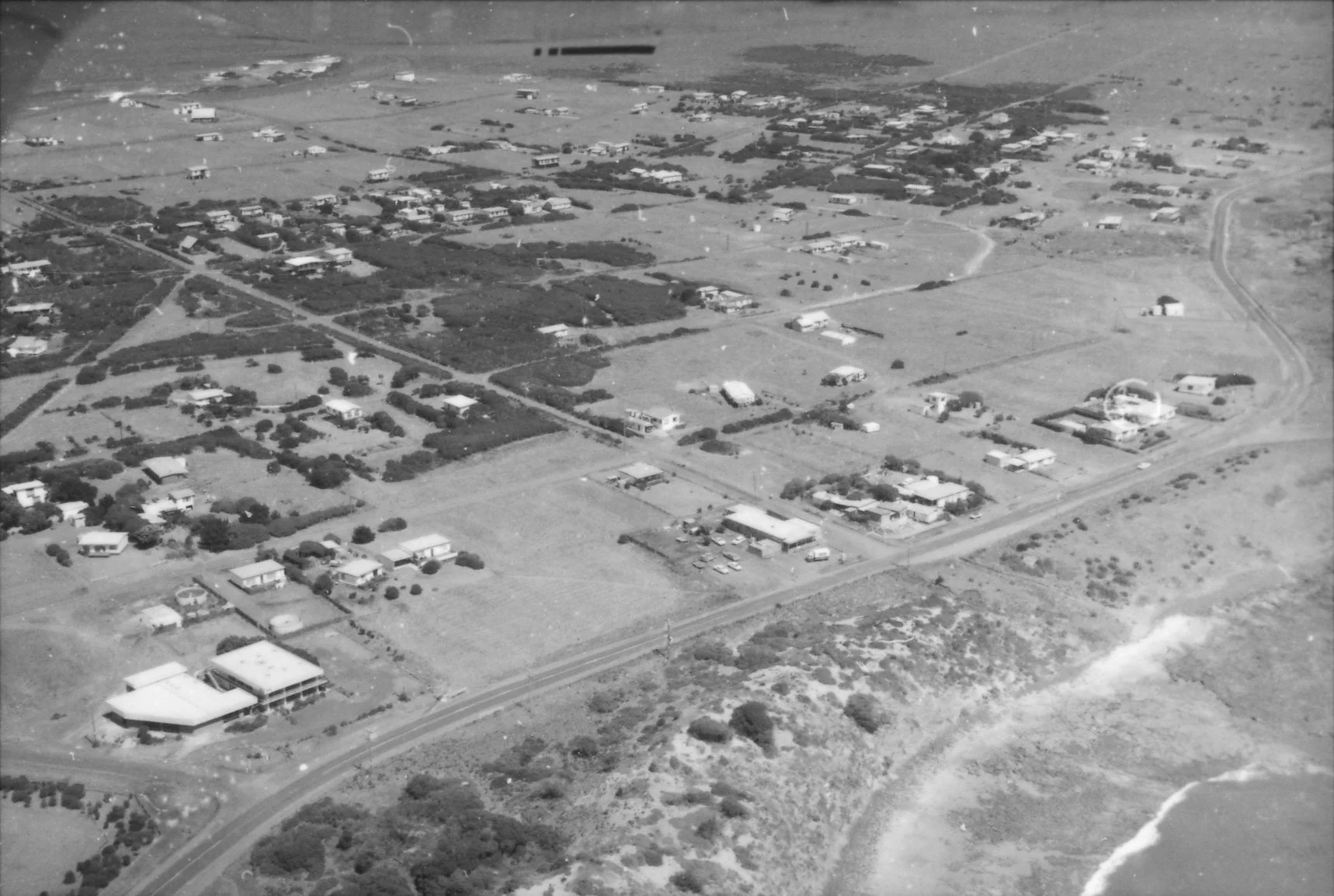
Summerlands before
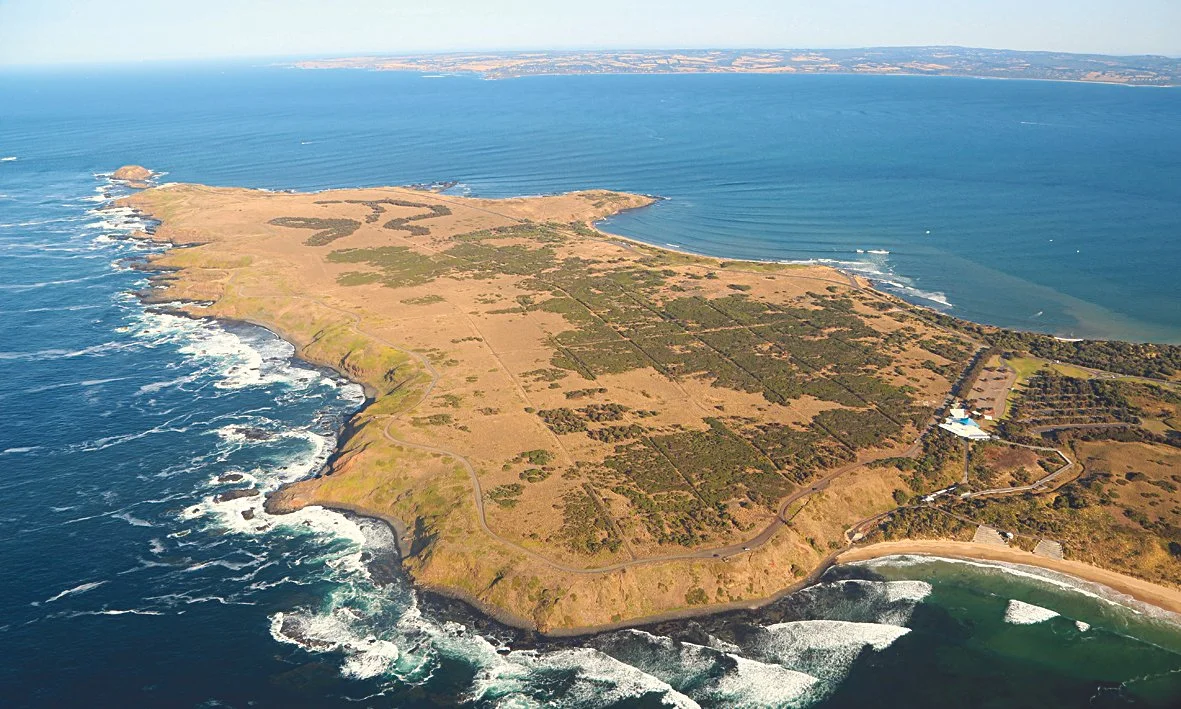
Summerlands after
Scenic Estate
From Wasteland
to Wildlife Haven
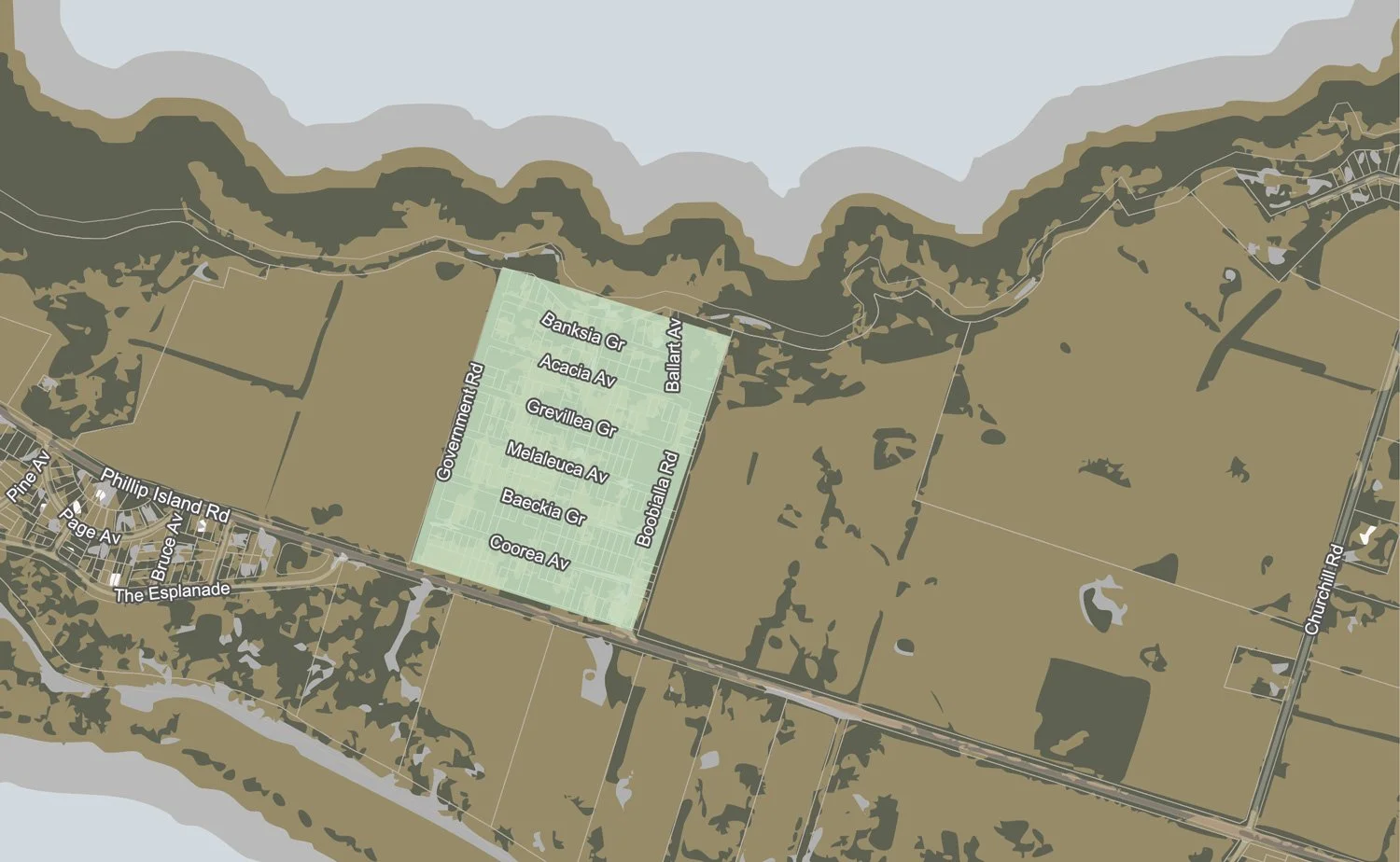
Scenic Estate Conservation Reserve, Surf Beach, Phillip Island is proof of what’s possible. A thriving dairy farm in the 1950s became a failed subdivision in the 1960s. Then, for decades, the 28-hectare site was plagued by illegal dumping, and damage from off-road vehicles. It was written off as a lost cause.
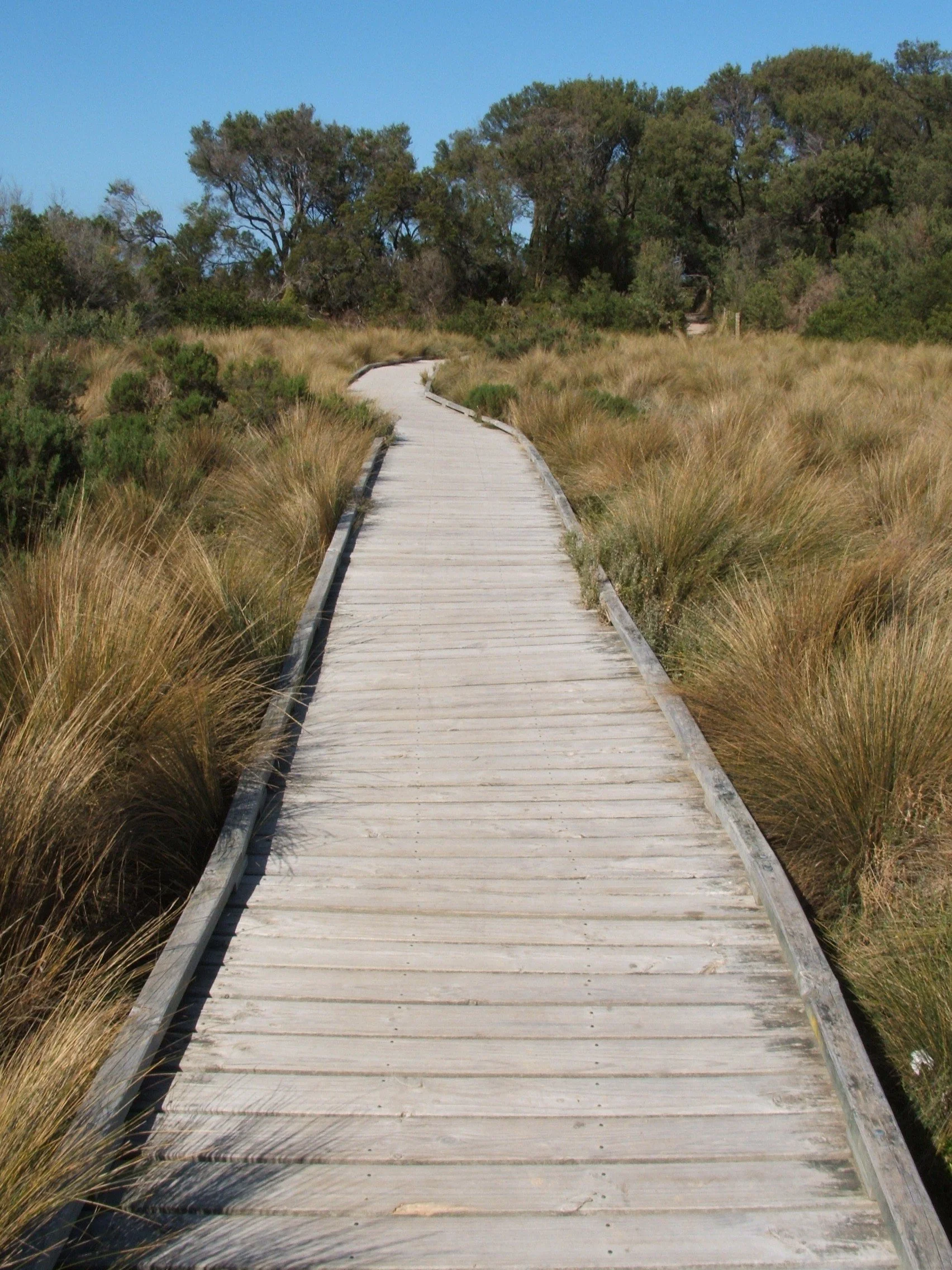
In 2012, everything changed. Bass Coast Shire Council, partnering with Phillip Island Nature Parks, Parks Victoria, and the State Government, restored the site and declared it a conservation reserve. Walking tracks, boardwalks, wetlands, and picnic areas were created to heal the land and reconnect people with nature.
By 2016, Scenic Estate Reserve was reborn – its biodiversity values restored becoming a haven for wildlife and a much-loved community asset.
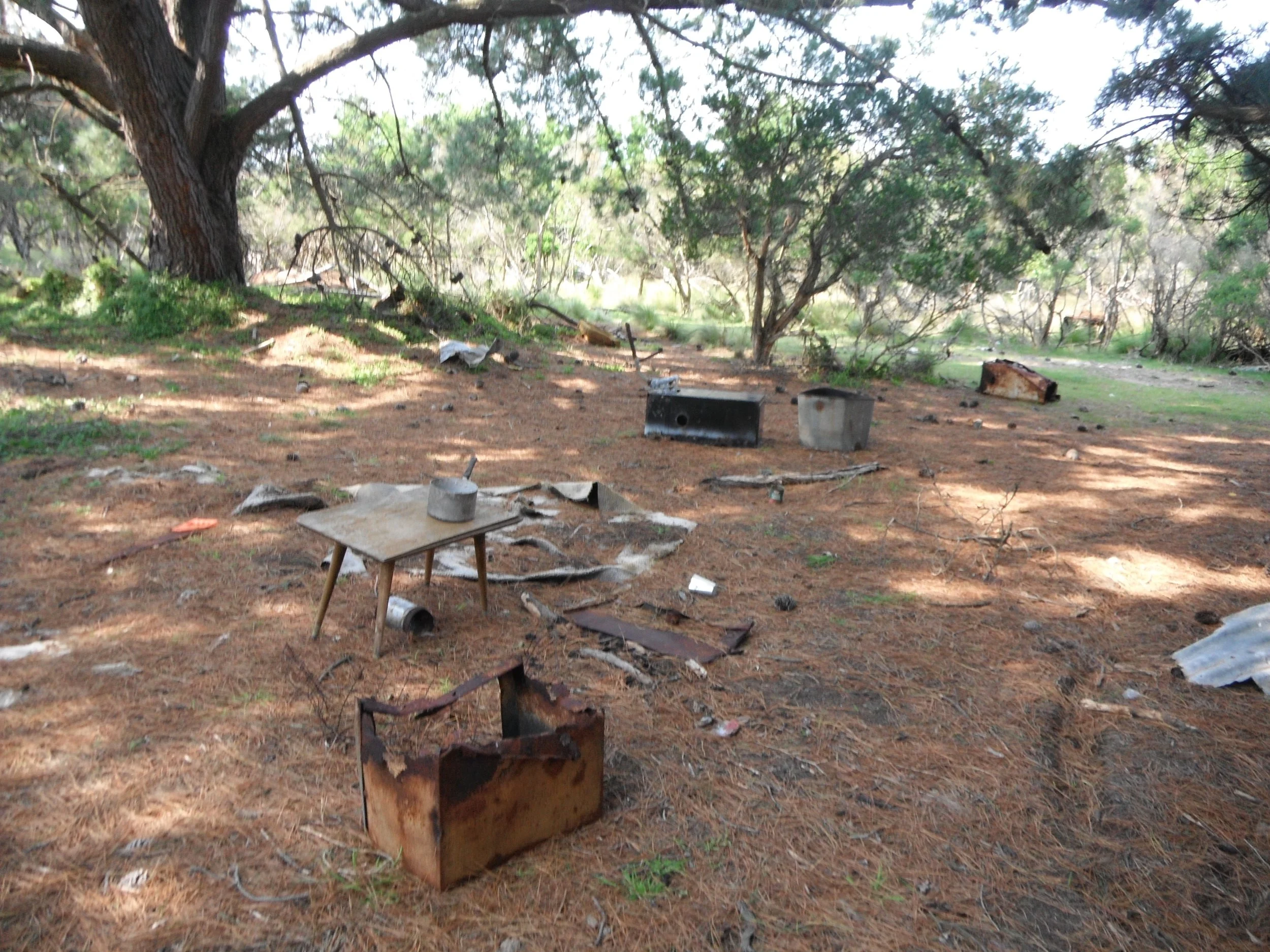
Scenic Estate before
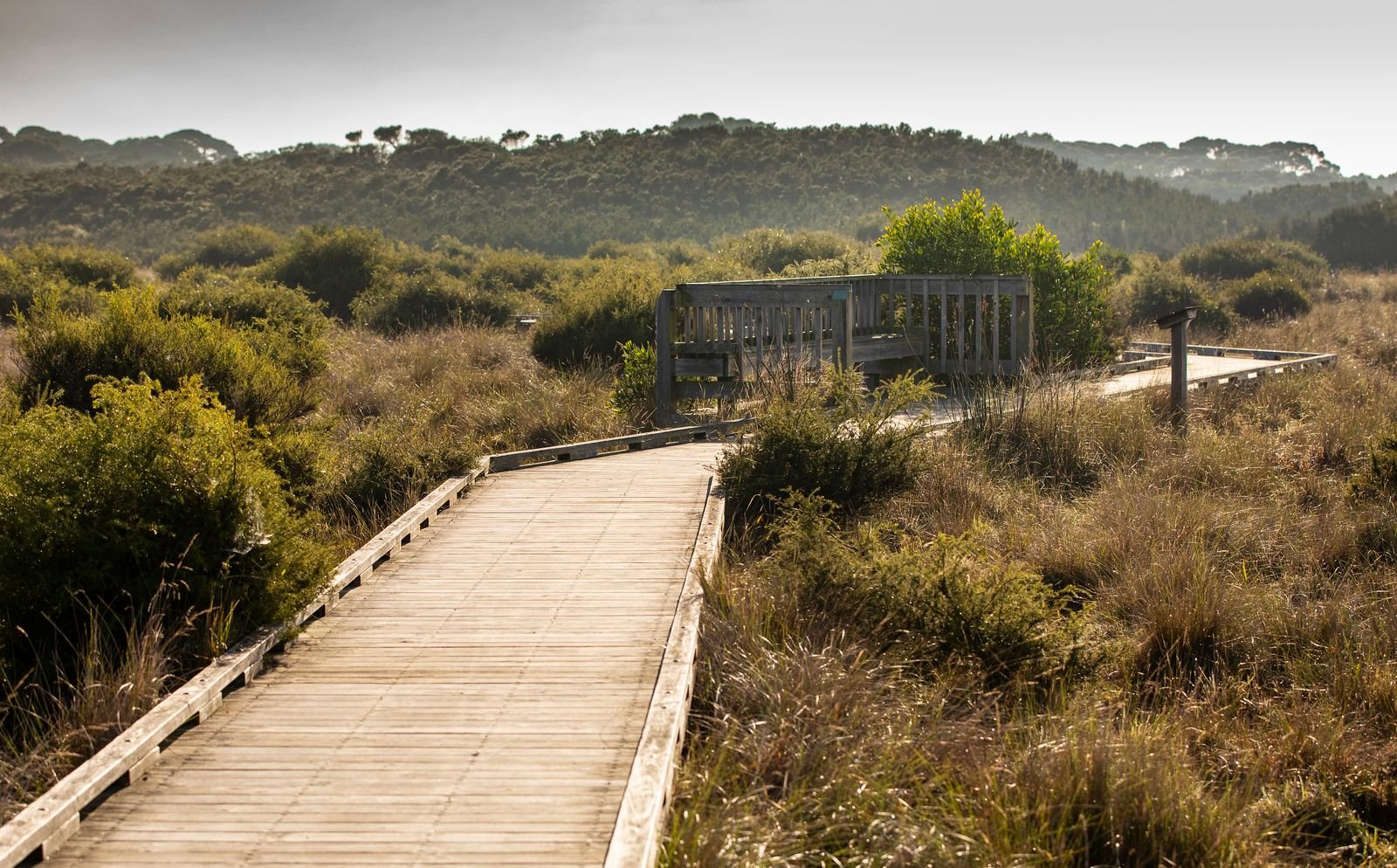
Scenic Estate after
Get Involved
Your support can transform Bass Coast and surrounds through philanthropy, corporate partnerships, bequests, community donations, and land contributions.
Together we can create a living legacy of biodiversity and resilience. Contact admin@naturerecoveryfoundation.org

How to Engage
Donate online or email admin@naturerecoveryfoundation.org to discuss ways to contribute.
Join as a corporate or philanthropic partner to co-design
impactful projects across all three pathways; Land
Donation, Land Acquisition or Stewardship Restoration
funding streams.Participate in community workshops and stewardship activities to contribute with hands-on conservation.
Leave a legacy through bequests, land gifts, or establishing named funds in any pathway.
Your engagement though any of the pathways will help to create a living legacy of biodiversity and resilience for Bass Coast and beyond. Together, we can protect nature and ensure communities thrive.